Get your lawn back on track with one FREE application!* One FREE Application!* Call Now

Do Mayflies Only Live 24 Hours? & Other Mayfly Questions

Posted on May 5, 2026

Get Answers About the Life & Danger of Mayflies

Homeowners make a lot of assumptions about mayflies. About where they come from, how long they live, if they’re harmful to humans, and more. These tiny, flying insects can arrive in massive waves and create a big mess. 

Want to dig deeper into the threat of mayflies to the Midwest? Keep reading! Because the team at Kapp’s Green Lawn is sharing what attracts mayflies to your property, how long they stick around, and what helps discourage them from swarming your home.

What Are Mayflies?

Mayflies aren’t actually flies. They’re more closely related to dragonflies, and you might know them as shadflies, lakeflies, or dayflies. It’s all the same insect, just different regional nicknames.

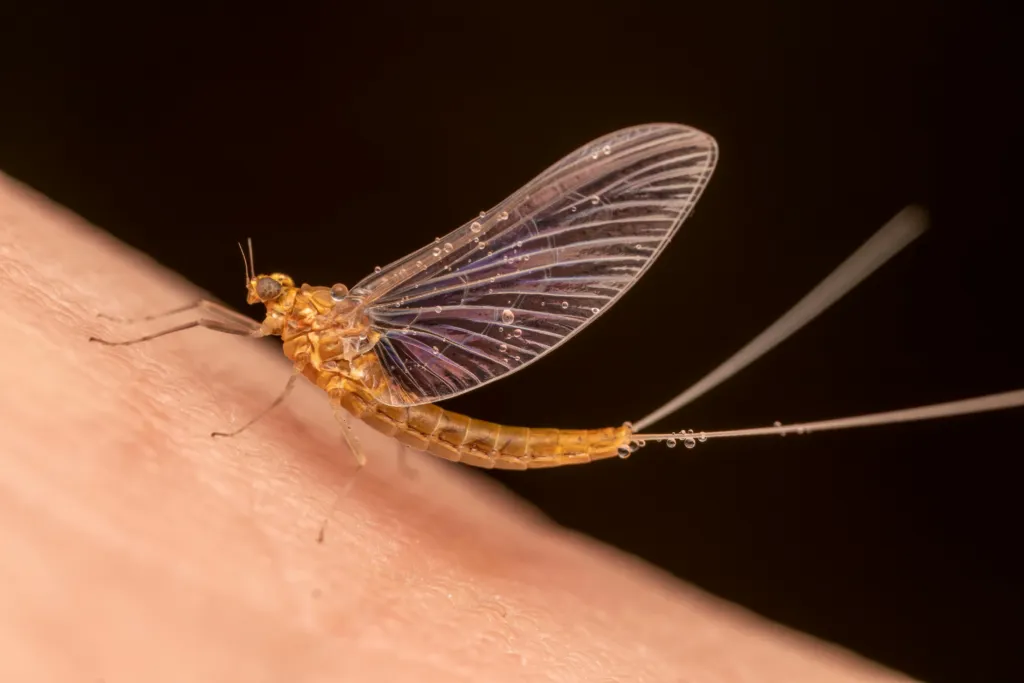
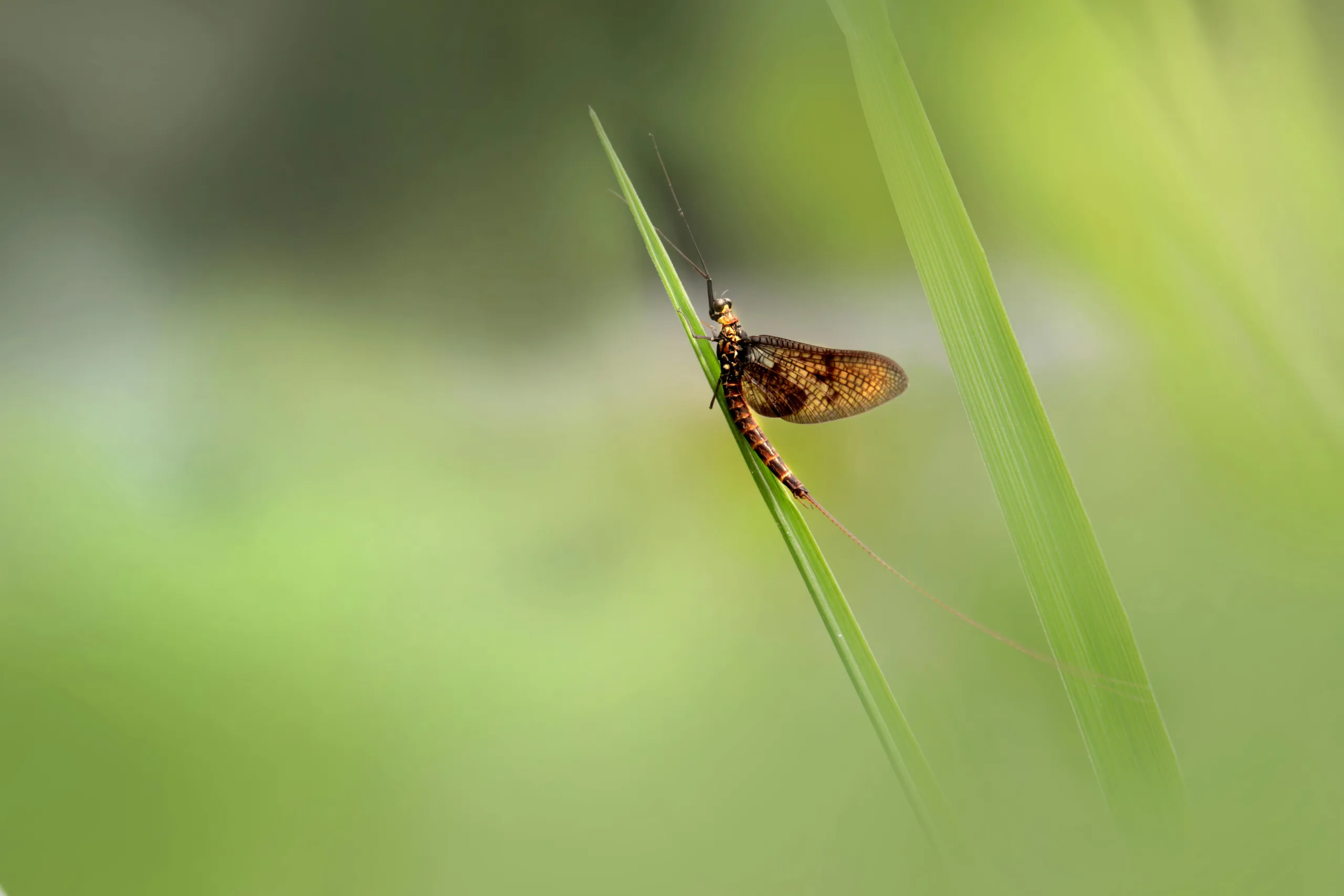
What makes them instantly recognizable? Their wings. While most insects fold their wings flat against their bodies when resting, mayflies hold theirs straight up. Paired with two or three long, delicate tail filaments trailing from the abdomen, it’s a distinctive silhouette. 

The body itself is slender and tapered, anywhere from a quarter inch to just over an inch long, with oversized compound eyes that look almost cartoonishly large relative to the head.

They’re fragile creatures, weak fliers, and they live, in their adult form, for an astonishingly short time.

The Two-Chapter Life of a Mayfly

This is the part most people find surprising.

The vast majority of a mayfly’s existence happens entirely underwater, invisible to anyone on the surface. After eggs are deposited on the water and sink to the bottom, they hatch into nymphs. These darker, gill-bearing juveniles burrow into sediment and spend their days grazing on algae and decomposing plant material. 

Depending on species and local conditions, nymphs live in this aquatic stage anywhere from a few months to two full years, molting dozens of times as they grow.

Then comes the dramatic change.

When water temperature, wind conditions, and seasonal cues align just right, thousands of nymphs trigger their emergence. They swim to the surface, shed their larval casing, and take to the air. Within hours, they turn into sexually mature adults. Then the clock starts.

Most adult mayflies live between 12 and 48 hours. That’s it. Two days at most, often considerably less. In that window, they don’t eat, they don’t bite, they don’t do anything except find a mate and reproduce. 

The female deposits anywhere from 500 to 8,000 eggs onto the water surface. Those eggs sink, and the cycle begins again.

Are Mayflies Dangerous?

The short answer? No. But there are several reasons for that.

Adult mayflies have mouthparts that are completely non-functional. There’s no feeding apparatus, no venom, no mechanism for delivering a bite or a sting of any kind. A mayfly that lands on your arm is doing absolutely nothing to you.

If you’ve walked through a swarm and come away with bites or welts, something else is responsible. Mosquitoes and midges often emerge under the same conditions and occupy the same airspace as mayflies. In a dense, disorienting cloud of insects, it’s easy to blame the most visible species. But the biter was almost certainly something else.

Disease transmission isn’t a concern either since mayflies don’t carry pathogens. Their effect on human health is essentially zero. However, they are a real nuisance. 

The real problem with mayflies? How many there are.

A heavy emergence deposits thousands of carcasses across your property in a short time. As they decompose, the smell becomes awful. On smooth surfaces (porch steps, sidewalks, driveways, etc.), these dead insects become a slipping hazard. Leave the buildup too long and you’ll find birds and bats moving in to scavenge as well.

A mayfly swarm won’t damage your home, harm your lawn, or threaten your health. But it can make your outdoor spaces uncomfortable or unusable for a couple of days. That’s the realistic scope of the problem.

How to Tell a Mayfly from Other Insects

Because mayflies share the same habitat and timing as other, more problematic insects, correct identification matters.

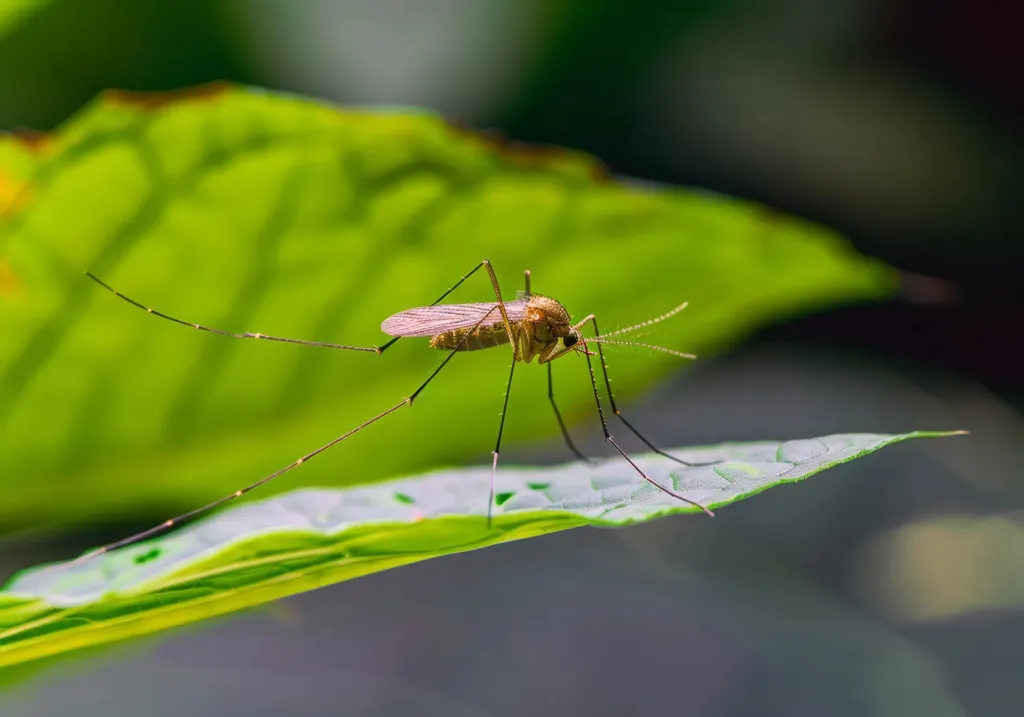
Mosquitoes are the most frequent source of confusion, especially during swarms. The differences are significant: mosquitoes bite, mayflies physically cannot. Mosquitoes rest with their wings flat against their bodies. Mayflies hold theirs upright. Look closely and you’ll see a mosquito’s narrow, needle-like proboscis. Mayflies have nothing like that.

If you’re dealing with mosquitoes, reach out to Kapp’s Green Lawn for mosquito barrier spray!

Crane flies are sometimes called “giant mosquitoes,” which is wrong and unhelpful. They’re larger than mayflies, their wings lie horizontal at rest rather than upright, and they lack the tail filaments. Harmless to people, though their larvae can occasionally stress turf.

Midges are smaller, common near water, and frequently mistaken for mayflies. Here’s the important distinction: certain midge species do bite. If you’re getting welts during what looks like a mayfly swarm, midges are the far more likely culprit.

When and Where to Expect Them

Mayfly season runs broadly from late spring through summer, but the exact timing depends heavily on geography.

In the South, warmer water temperatures through winter and early spring accelerate development, pushing peak emergence into April or May.

The Midwest and Great Lakes region sees its most dramatic activity from late May through July, particularly along major rivers and coastlines. Some Lake Erie communities have experienced emergences thick enough to close roads. Further north, the season arrives later and tends to compress into a shorter, more concentrated window.

Evening conditions do most of the work. Still air, mild temperatures, and proximity to water are the combination that triggers large-scale emergence events. A cold front can shut things down quickly, but the pause is usually temporary.

Year-to-year swings can be significant. Mild winters, warmer-than-average springs, and good water quality during the nymph stage all contribute to unusually large hatches.

Why Does Your Property Attract Mayflies?

Location is the primary factor. Homes in the Midwest within roughly a mile of a lake, river, or pond during emergence season are in the direct path of any swarm originating from that waterway. But several property-specific factors influence just how heavily mayflies concentrate on your home specifically.

Artificial lighting is the biggest draw. Mayflies use natural light for navigation, and artificial sources disrupt that system, pulling insects toward the source. Bright white and blue-spectrum bulbs are particularly effective attractants. Older mercury vapor fixtures are especially problematic.

Reflective surfaces also play a role. Mayflies appear to mistake certain reflected light signatures for water. Glossy car paint, swimming pools with overhead illumination, or polished siding can all trigger a landing response.

Calm evening air matters too. Wind is one of the few things that reliably suppresses swarm activity. When conditions feel pleasant and still, that’s when emergences materialize.

Managing Mayflies: What Actually Works?

The breeding source (lakes, rivers, and ponds) isn’t something that can realistically be addressed. The approach is damage limitation, not elimination.

Clean up fast. Once a swarm passes, act promptly. A broom, shop vacuum, or garden hose handles the bulk of the carcasses. Getting ahead of decomposition keeps odor manageable and eliminates the slip hazard before it develops into a problem.

Switch your lighting. Transitioning from bright white bulbs to warm amber or yellow LEDs reduces the draw significantly. Motion-activated fixtures help by limiting how long lights run during peak emergence hours. Pointing fixtures downward reduces how far light disperses into the surrounding air.

Reduce other attractants. Check window and door screens for gaps. Close curtains near exterior-facing windows after dark. A fan running on a porch or patio creates airflow that mayflies struggle to navigate through. Decorative water features can attract egg-laying females, so factor those in as well.

Insecticides aren’t really worth it. The adult phase is so brief that most products can’t make a meaningful dent before the swarm ends on its own. Beyond effectiveness questions, applying pesticides near water carries environmental risks that simply aren’t justified when you’re dealing with an insect that poses no real threat. For commercial properties with severe recurring infestations, targeted treatments can occasionally be appropriate, but for the average homeowner, light management and quick cleanup outperform anything from a spray can.

When to Call a Professional

Most mayfly swarms resolve naturally within a few days. For the majority of homeowners, light management and cleanup are sufficient.

That said, there are situations where professional evaluation makes sense:

  • Swarms that return severely every season despite your own management efforts
  • Commercial or high-traffic properties where insect accumulation creates documented safety hazards
  • Situations where you genuinely can’t tell whether you’re dealing with mayflies, mosquitoes, or midges

If you’re uncertain what you’re dealing with, or if a recurring infestation has made parts of your property genuinely unusable, a professional assessment removes the guesswork and helps determine whether other contributing factors are at play.

Mayfly FAQs

  • How long does a swarm typically last?

    One to three days at peak intensity. Events can stretch to about a week when multiple species hatch in overlapping waves.

  • Does a swarm mean nearby water is polluted?

    No, the opposite. Mayflies require clean water to develop. A thriving population near your home generally signals good water quality.

  • Can mayflies get established inside my house?

    No. They don’t breed indoors and have no interest in any indoor resource.

  • Do they damage lawns or plants?

    Adult mayflies are incapable of feeding. There’s no plant damage or lawn damage.

  • Why do they swarm around lights?

    They navigate using natural light sources. Artificial lighting disrupts that orientation system and pulls them in, sometimes from a considerable distance.

Reach Out When Flying Insects Are Swarming!

Mayflies may not be a major issue. You can change the lighting, clean up the mess, and wait until the mayflies are gone. However, if you’re not sure what pest you’re dealing with or want to ensure your outdoor spaces stay safe, Kapp’s Green Lawn is ready to help.

Don’t waste your free time and energy! Want to take care of lawn care or flying pests like mosquitoes? Reach out to Kapp’s Green Lawn today! We proudly serve communities in the Midwest, providing high-quality lawn care services in these areas: