Get the Scoop on This Beautiful, Cool-Season Grass
What’s In This Article?
- Perennial ryegrass is a fast-germinating cool-season grass that doesn’t spread, so bare spots need overseeding
- It thrives best in mild, moist regions and is used for patching or winter overseeding
- It establishes quickly and holds up to traffic with low thatch but needs more nitrogen and mowing and struggles in shade or extreme weather
- Tall fescue handles heat better and Kentucky bluegrass is more resilient, while ryegrass grows more quickly
- Keeping it looking good means mowing at 1.5 to 2.5 inches, watering about an inch weekly, fertilizing heavily, and overseeding regularly
- Reach out to Kapp’s Green Lawn to learn more about lawn seeding
What Is Perennial Ryegrass?
Perennial ryegrass is a cool-season grass native to Europe and Asia. It’s what’s called a bunchgrass, meaning it grows in clumps, or tillers, rather than spreading out through underground rhizomes or surface-hugging stolons.
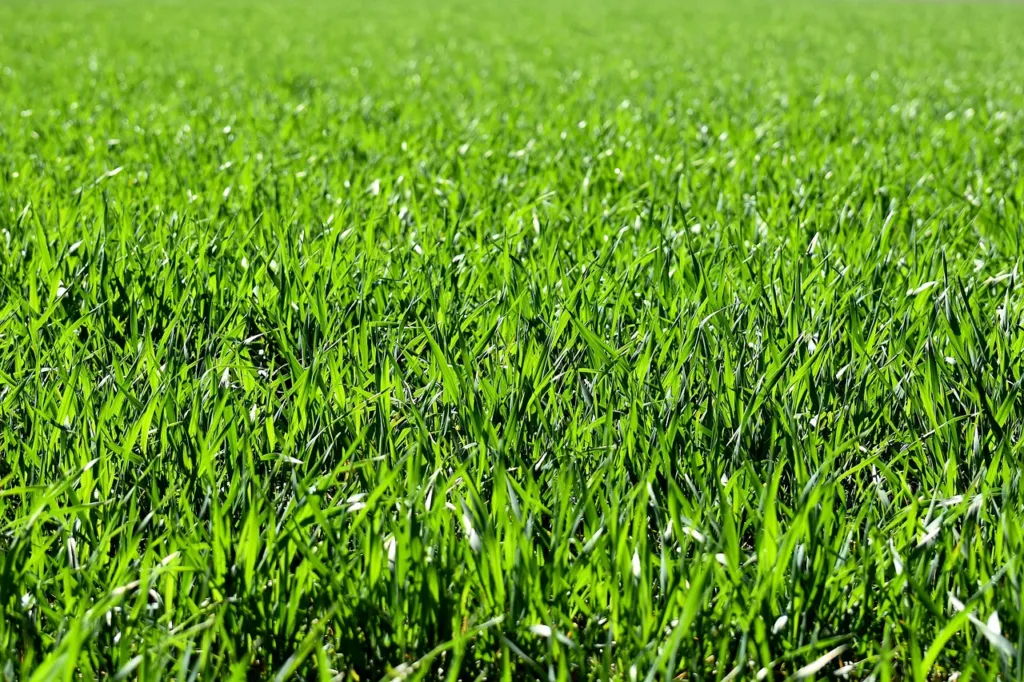
You’ll find perennial ryegrass on home lawns, golf courses, athletic fields, and even pastures. If you’ve driven past a golf course fairway and admired the deep green grass with an almost glossy sheen, you were probably looking at perennial ryegrass.
It’s usually grown as part of a mixture with Kentucky bluegrass rather than just by itself, especially outside its ideal climate zones.
Homeowners in the transition zone or the South may use it during winter overseeding, when it’s brought in to keep a lawn looking alive while the warm-season grass underneath goes dormant for the winter.
How to Tell If It’s Perennial Ryegrass
This kind of cool-season grass has a look that’s fairly easy to pick out once you know what you’re after.
- The blades are fine, dark green to blue-green, with a glossy underside and a ridged top surface.
- New leaves fold up inside the shoot rather than rolling.
- The leaf tip is pointed, sometimes described as speedboat-shaped, and there’s a distinct center keel running down each blade.
Perennial Ryegrass vs Other Grasses
Perennial vs Annual Ryegrass
Both types germinate quickly and offer solid short-term cover, which is why they’re both popular for erosion control and quick green-ups. The difference is longevity.
Perennial ryegrass comes back year after year in climates that suit it, like mild winters and cool summers. Annual ryegrass, on the other hand, is a one-season deal.
Annual ryegrass used to dominate southern winter overseeding, but perennial ryegrass has mostly taken over that job because it holds its color and texture better through the winter months.
One tip worth remembering: Always check the seed label before buying. Annual and perennial ryegrass get mixed up more often than you’d think, and that mix-up can cost you a season of results.
Perennial Ryegrass vs Tall Fescue
Tall fescue generally wins on extreme heat tolerance, drought resistance, and overall low-maintenance living across a wider range of climates. Ryegrass counters with faster germination, finer texture, a darker look, and sharper striping. Plus, the ability to be mowed shorter.
Both of these grasses are bunch-forming, so neither repairs bare patches on its own, so overseeding is part of the deal either way.
Tall fescue’s blades run wider and are usually kept around 3.25 to 4 inches tall, while ryegrass is often mowed shorter.
For homeowners outside mild coastal or Pacific Northwest climates, tall fescue is usually the safer full-lawn bet. Combined, though, they make a strong pairing with a beautiful appearance from the ryegrass and resilience from the fescue.
Perennial Ryegrass vs Kentucky Bluegrass
Ryegrass wins the germination race by a mile, which makes it handy for quick patches and renovation projects. Kentucky bluegrass is slower off the blocks but spreads through rhizomes, giving it self-repair ability that ryegrass simply doesn’t have.
Ryegrass produces less thatch, tolerates shorter mowing, and stripes beautifully. Kentucky bluegrass generally handles extreme cold better, though that depends on cultivar, snow cover, and disease pressure too.
Mixed lawns lean on both strengths. Ryegrass for the fast cover, bluegrass for the long-term repair.
The Benefit of Modern Cultivars
In the past, ryegrass varieties established fast but mowed poorly. The result was thin turf, weak performance in heat or cold, and a need for more nitrogen.
However, ryegrass cultivars have improved since then. Today, you can enjoy finer texture, darker color, cleaner mowing, slower vertical growth.
Some newer cultivars even have a greater natural resistance to pests like sod webworms, billbugs, and chinch bugs, along with better overall stress tolerance.
Of course, precise cultivar selection still matters enormously, so it’s important to check the grass’ ratings for quality, cold tolerance, and disease resistance before buying seed. It takes a second but will save you headaches down the road.
Is Perennial Ryegrass Good for Midwest Lawns?
Perennial ryegrass thrives in mild, temperate climates where there are cool summers, cool winters, and moist but well-drained soil.
In the Pacific Northwest and northern California, perennial ryegrass by itself works well as a permanent lawn grass.
Outside of those areas, like in the Midwest, it plays more of a supporting role as an overseeding option, or a piece of a larger seed blend. In areas with prolonged summer heat or harsh winters, a full ryegrass lawn tends to struggle.
Why Do People Love It?
There’s a lot to like about perennial ryegrass, both visually and with its performance.
- Germination speed. Often within 4 to 6 days, with roughly 60% coverage in 10 to 14 days. Bare patches can fill in within 3 to 4 weeks.
- Quick green-up. Spring and fall establishment happens fast, even in cooler weather.
- Looks sharp. Dark color, fine texture, and strong mower striping give it that manicured, professional-turf appearance.
- Traffic tolerance. Athletic fields, active backyards, and dog-friendly lawns all hold up well under it.
- Low thatch. It rarely needs dethatching, which saves you time and effort.
The Downsides of Perennial Ryegrass
As we mentioned already, it’s a bunchgrass. That means it can’t fill in damaged areas on its own.
If the plant weakens, it generally doesn’t grow back, so you have to overseed. Plus, areas of only perennial ryegrass can thin out over time and lose ground to weeds, moss, or more aggressive grasses.
It’s also hungrier than most cool-season grasses and has higher nitrogen needs, leading to faster leaf growth and more frequent mowing.
Also, it doesn’t thrive in heavy shade. Under a dense canopy, you can expect thin, patchy turf. And while some seed mixtures load up on ryegrass because it’s inexpensive and quick, that shortcut sometimes leads to higher reseeding costs later. Affordable now doesn’t always mean affordable later.
What Is Perennial Ryegrass Used For?
Patching. Because it germinates so quickly, ryegrass is a go-to for covering bare soil, repairing damage, and controlling erosion. It’s often planted alongside slower-establishing Kentucky bluegrass to provide an attractive appearance more quickly while the bluegrass catches up.
Permanent lawns. In the Pacific Northwest especially, it’s a solid choice for home lawns, sod farms, athletic fields, and golf courses, either alone or blended with Kentucky bluegrass and tall fescue.
Southern winter overseeding. Homeowners with dormant Bermuda often seed ryegrass over it in fall, once nighttime temperatures hover around 65°F to 70°F. It keeps the lawn green through winter, then fades out as summer heat returns and the Bermudagrass wakes back up.
Does Perennial Ryegrass Die in the Summer?
It depends. In permanent northern lawns, ryegrass may slow down or go semi-dormant during a hot stretch, but it’s not automatically dead. It could just be stressed. In southern overseeded lawns, though, death is the expected outcome once summer heat rolls in.
Summer survival hinges on region, cultivar, how long the heat lasts, humidity, soil type, and root development. Improved cultivars generally outperform older, shallow-rooted varieties.
You may hear conflicting stories from homeowners, with some saying their ryegrass sailed through a brutal summer with deep watering, while others watched it fade within weeks. Both experiences are probably true, just under different conditions.
Tall fescue tends to be the sturdier option through sustained heat. And prolonged, severe drought can outright kill individual plants, leaving behind patchy clumps that need overseeding to recover.
Watering Perennial Ryegrass During Hot Weather
Deep, infrequent watering beats frequent shallow sprinkles. It trains roots to grow downward instead of staying near the surface where they’re vulnerable.
Established lawns generally need about 1 to 1.25 inches of water weekly during summer, rainfall included, split across one to three sessions depending on climate and soil.
Raising the mowing height during heat and dry spells also reduces stress on the plant. Avoid the temptation to water a little bit every day. Again, this just encourages shallow roots and creates the damp conditions that diseases love.
Planting Perennial Ryegrass Seed
Start by assessing your site’s sun exposure, existing grass, climate, and how the lawn gets used. Ryegrass prefers sun to light shade and moist, well-drained soil with a pH between roughly 5.5 and 7.5. A soil test beforehand saves you from guesswork.
- Early fall (about 45 days before the first expected frost) is the best window for permanent lawns, with soil temperatures around 50°F to 65°F for optimal germination.
- Spring is the second-best option.
- Southern overseeding happens once the warm-season lawn starts browning for winter.
Seed at a rate of roughly 6 to 8 pounds per 1,000 square feet, and keep the seedbed consistently moist with short, frequent watering sessions until you hit around 60% coverage. From there, transition to deeper, less frequent watering.
Caring for an Established Ryegrass Lawn
Mowing:
Keep it around 1.5 to 2.5 inches during active growth, raising it to 3 to 4 inches during summer heat. Never remove more than a third of the blade at once, and keep mower blades sharp. Dull blades shred ryegrass’s fibrous leaves and open the door to disease.
Watering:
About 1 inch weekly in spring, up to 1.25 inches in summer, tapering off in fall for northern lawns. Southern winter lawns generally stay around 1 inch weekly.
Fertilizing:
Ryegrass is a hungry grass. Expect to apply roughly 4 to 8 pounds of nitrogen per 1,000 square feet annually in dense Pacific Northwest turf. Underfeeding invites thinning, red thread, and moss, while overfeeding just means more mowing and potential disease pressure.
Time applications around early spring crabgrass prevention, late-spring weed control, split summer feedings, and a solid fall fertilization six to eight weeks before frost.
Soil and thatch:
Test soil every three to four years and aerate compacted areas as needed. The good news is that bunch-forming ryegrass rarely builds up thatch on its own.
Diseases, Pests, and Other Challenges
Ryegrass can run into red thread, pink patch, crown rust, leaf spot, grey leaf spot, and various patch diseases, along with snow mold where snow lingers too long. Grey leaf spot in particular flares up during hot, humid summers.
On the pest side, watch for grubs, Japanese beetles, billbugs, sod webworms, and chinch bugs.
Because of its bunch-forming habit, thinning is inevitable over time, leaving openings for weeds and moss to move in. High-traffic areas like athletic fields often need routine overseeding just to stay dense.
A Season-by-Season Guide
- Spring (March–May): Resume mowing around 1.5 to 2.5 inches, apply crabgrass prevention, water deeply at about 1 inch weekly.
- Summer (June–August): Raise mowing height to 3–4 inches, split fertilizer applications, water 1 to 1.25 inches weekly, and watch for heat stress versus true dormancy.
- Fall (September–November): Best seeding window of the year, fall fertilizer six to eight weeks before frost, aerate and clear leaves.
- Winter (December–February): Southern lawns keep mowing and watering; northern lawns mostly rest, aside from clearing debris and watching for snow mold.

 Ice + Snow = Slips and Falls! Order Ice Melt now. Starting at $59/bucket. Free delivery!