
Find Out How to Get Rid of Nutsedge in Midwest Lawns
Main Points About Nutsedge
- The nutsedge weed comes back every single year.
- It doesn’t grow from seeds but spreads through underground tubers called nutlets, meaning the pre-emergent herbicides you rely on for other weeds are completely ineffective against it.
- One nutlet left behind in the soil can generate nearly 2,000 new plants and close to 7,000 new tubers in a single season.
- There are two main types: Yellow nutsedge is more common across the Midwest and slightly easier to control. Purple nutsedge is more aggressive, stubborn, and likely to require professional-grade intervention.
- Getting nutsedge under control requires the right herbicide, treatment timed to when plants are young and active, and a steady process across multiple seasons.
- Prevention via healthier soil, smarter watering, and denser turf reduces the pressure over time.
- When the infestation is too much for DIY efforts, reach out to Kapp’s Green Lawn!
What Is Nutsedge?
It’s a weed that’s easy to overlook. You may notice a patch growing a little faster that’s a slightly different shade of green. You might pull it out, but it seems to come right back. Within a couple of weeks, there’s suddenly more of it than there was before.
That’s nutsedge. And while you probably just want to pull it, don’t! That can actually spread it.
Despite its grass-like appearance, nutsedge is a sedge. Its anatomy, growth behavior, and underground structure require a different weed control approach than you’d use on broadleaf weeds or even grassy invaders like crabgrass.
The leaves are stiffer and thicker than typical turf grass, and they emerge in groups of three from the base of the stem. Growth is rapid and straight up, especially in summer.
This weed outpaces surrounding grass between mowing sessions, which is what makes most homeowners notice it first.
Underneath the surface is the real problem. A network of rhizomes extends outward from each plant, with small tubers called nutlets forming along them. Even if you kill everything above ground, these nutlets wait below, sometimes for years, until conditions are right to produce new shoots. That’s the main reason nutsedge is extremely difficult to get rid of.
For homeowners in the Midwest, professional lawn care from Kapp’s Green Lawn can help you manage nutsedge and other annoying weeds.
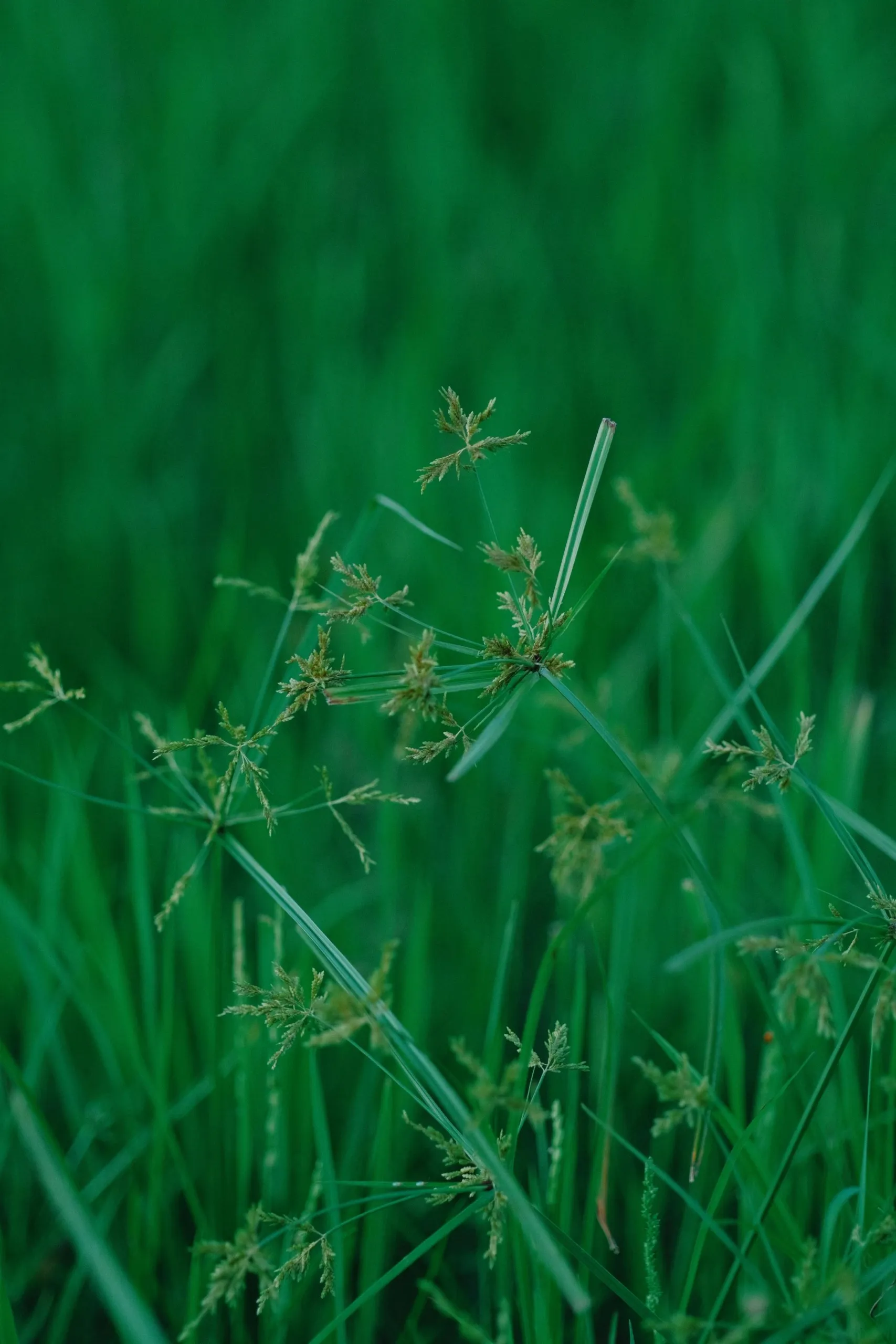
Nutsedge or Something Else?
The easiest way to tell if it’s nutsedge or not is in the stem. Pinch one and roll it between your thumb and forefinger. Nutsedge stems are triangular. Grass stems, by comparison, feel round or flat.
What other features should you look for?
- Leaf surface: a subtle waxiness that gives it a faint shine compared to the flatter look of most lawn grasses
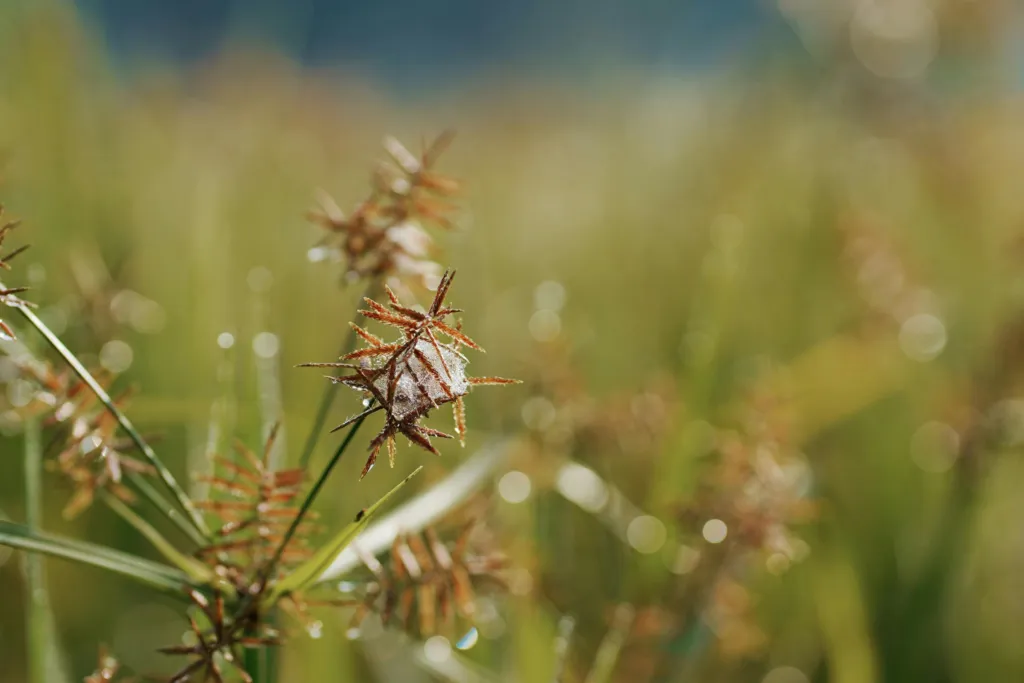
- Mature flower head: a spiky, branching cluster at the top of the stem, roughly resembling an open umbrella
- Leaf color: noticeably more yellow-green or lime-toned than other turf
- Leaf arrangement: three blades growing from the same base point on the stem
- Growth pace: shoots that stand above the surrounding grass well before the next mowing
In a well-maintained lawn, nutsedge stands out due to the faster growth, color difference, and texture contrast. So once you know what you’re looking for, it’s not difficult to spot. The real challenge is stopping it from flourishing.
Yellow Nutsedge vs Purple Nutsedge
Yellow nutsedge is the more frequently encountered of the two across Ohio, Indiana, Missouri, and Pennsylvania. It tends to show up in early to mid-summer and is more responsive to well-timed herbicide applications. Its nutlets form at the ends of rhizomes, which means the plant’s spread pattern is a bit more predictable. Wet, poorly drained areas are its preferred territory, and mowing too short consistently gives it an easy opening.
Purple nutsedge is more problematic. Unlike yellow nutsedge, its rhizomes generate nutlets all the way along their length. What that means is that any significant disturbance to the plant can scatter nutlets across a wider area and make the infestation worse.
Purple nutsedge also tends to emerge somewhat later in summer. It’s more common in the Southeast, though it does appear in warmer Midwest locations as well. It generally requires commercial-grade herbicide programs to achieve real results.
There’s also a third plant worth knowing about: kyllinga. It’s closely related to nutsedge and regularly gets confused with it. However, kyllinga’s root system is considerably weaker and the right herbicide typically handles it more efficiently.
Not sure which species you’re looking at? Get a professional to confirm the identification so you don’t waste time, energy, and money.
Where & When Nutsedge Prefers to Grow
Moisture is the key environmental factor. Spots that drain slowly after rain, sections near downspouts, low-lying zones where water collects, and lawns on heavy clay soils are exactly where nutsedge thrives.
Overwatering creates similar conditions even in lawns with decent natural drainage, keeping the upper soil layer wet in a way that strongly favors this weed over your turf grass.
Compacted soil is another contributing factor. Most turf grasses struggle in highly compacted ground, but nutsedge tolerates it comparatively well. This means it frequently takes over areas where your lawn is thinning, growth is patchy, or root development is limited.
The Midwest timeline for nutsedge typically begins with emergence in late spring as soil temperatures recover from winter. Growth intensity builds through summer and reaches its most aggressive point during the hottest weeks, exactly when cool-season grasses like fescue and bluegrass are already under heat stress.
Nutsedge remains visible through early fall and then dies back as temperatures drop. The above-ground plant disappears. The nutlets don’t. They stay in the soil, ready to start the process over next spring.
Why Nutsedge Is So Stubborn
Most weed problems respond eventually to a consistent, correctly applied herbicide program. Nutsedge responds but more slowly and with more setbacks than most other weeds.
The nutlet system is why. Nutlets can remain viable in the soil for an extended period, sitting through treatment cycles unaffected, then germinating when they sense favorable conditions. A lawn that appeared clear after a season of treatment can show fresh nutsedge the following year from nutlets that were never reached by any product applied.
Root depth makes them even more difficult to kill. Nutsedge root systems commonly reach 8 to 18 inches below the surface. That puts a significant portion of the plant well beyond the reach of most surface treatments and essentially guarantees that hand-pulling won’t work.
Spread is also difficult to contain. Seeds, rhizomes, and nutlets all work simultaneously. Foot traffic, mowing equipment moving between lawn sections, and surface water movement can all transport nutlets from an infested area to a clean one.
A weed that spreads through this many pathways? It requires a deliberate, consistent program to bring under control.
Your Plan For Managing the Nutsedge Weed
There’s no single-application solution. The goal is a reduction over several treatment years.
- Identify before you act. Confirm the triangular stem, the three-bladed leaf arrangement, the rapid vertical growth. Also determine whether you’re dealing with yellow or purple nutsedge, since treatment approaches can differ. Applying the wrong product wastes the application window.
- Use a selective sedge herbicide. Broadleaf weed killers don’t reach the underground structures that sustain nutsedge. Products specifically formulated for sedge species are required. For cool-season grasses like fescue and bluegrass, halosulfuron-based herbicides have a strong track record against both yellow and purple nutsedge. Sulfentrazone-based formulations are another well-established option.
- Leave the hand-pulling alone. Yanking the plant out removes the visible shoot and leaves the nutlets. Plus, the disturbance tends to wake up dormant nutlets in the surrounding soil.
- Apply when plants are young. The late spring to early summer window is when treatment is most effective. Younger plants absorb herbicide more readily and haven’t yet developed the extensive nutlet networks that make mature plants harder to knock back.
- Protect your application. Hold off on mowing for 48 hours on either side of a treatment. The intact leaf surface is the delivery mechanism. Plan for a follow-up application 7 to 10 days after the first.
The Problems Nutsedge Creates for Your Grass
A few isolated patches might not register as an urgent problem. But nutsedge compounds. It grows faster than turf grass and competes for water, nutrients, and soil space.
Guess what? By the time an infestation is obvious, it’s already been drawing resources away from your lawn for weeks.
Over a full growing season, the impact is measurable. Infested areas thin out as the weed outcompetes grass for what it needs. Those thinning zones become openings that other weeds move into.
And because the nutlet system keeps regenerating new growth regardless of what happens above ground, even a visible improvement after treatment doesn’t mean the underground population has been eliminated.
Recovery from a meaningful nutsedge infestation is a multi-season process. Progress from this resilient weed builds gradually rather than resolving in a single summer.
What Gives Your Lawn the Edge?
Active treatment addresses the infestation. Adjusting the lawn’s growing environment reduces the conditions that allowed nutsedge to establish in the first place. These steps don’t eliminate the risk entirely, but they shift the competitive balance toward your turf.
Build turf density
Thick, healthy grass crowds out opportunities for nutsedge to establish. Overseed thin areas in the appropriate season for your grass type, maintain a consistent fertilization schedule, and mow at the recommended height.
Rethink your watering approach
Frequent, shallow irrigation keeps the upper layer of soil persistently moist, which nutsedge likes. A single thorough watering session per week encourages grass roots to develop at depth.
Mulch non-turf areas
In garden beds and other areas without grass, three to four inches of mulch suppresses nutsedge emergence and limits spread near lawn edges.
Fix the drainage problems you’ve been ignoring
Areas that stay wet for prolonged periods of time are nutsedge’s most reliable entry points. Regrading, filling, or amending soil in those areas removes a consistent competitive advantage the weed has been exploiting.
Aerate every year
Compacted soil suppresses turf root development and gives nutsedge a relative advantage it doesn’t earn in looser, better-structured ground. Annual aeration improves water movement, air exchange, and nutrient delivery to the root zone.
Get the Pros at Kapp’s to Help!
For early-stage or mild infestations, a disciplined DIY approach can make real progress. But nutsedge that has returned aggressively after previous treatment, spread significantly across the lawn, or simply stopped responding to retail herbicide products is beyond what off-the-shelf programs are generally equipped to handle.
Professional treatment programs, expertise in Midwest weeds, exceptional products, and a customized treatment schedule can help you manage nutsedge. The difference between a program that chips away at the problem steadily and one that stalls out usually comes down to those details.
If nutsedge has become a recurring frustration in your yard, or if previous treatments haven’t made a difference, reach out to Kapp’s Green Lawn! We proudly serve communities in the Midwest, ensuring high-quality lawn care services in these areas:
- Cleveland, OH
- Fort Wayne, IN
- Indianapolis, IN
- Pittsburgh, PA (eastern)
- Pittsburgh, PA (western)
- St. Louis, MO
Nutsedge is a difficult weed to kill…but it’s possible. Correct identification, the right herbicide for your grass type, applications timed to the early growth window, and consistent follow-through across seasons. That’s what works! The infestation will get smaller, and your lawn will get healthier.