
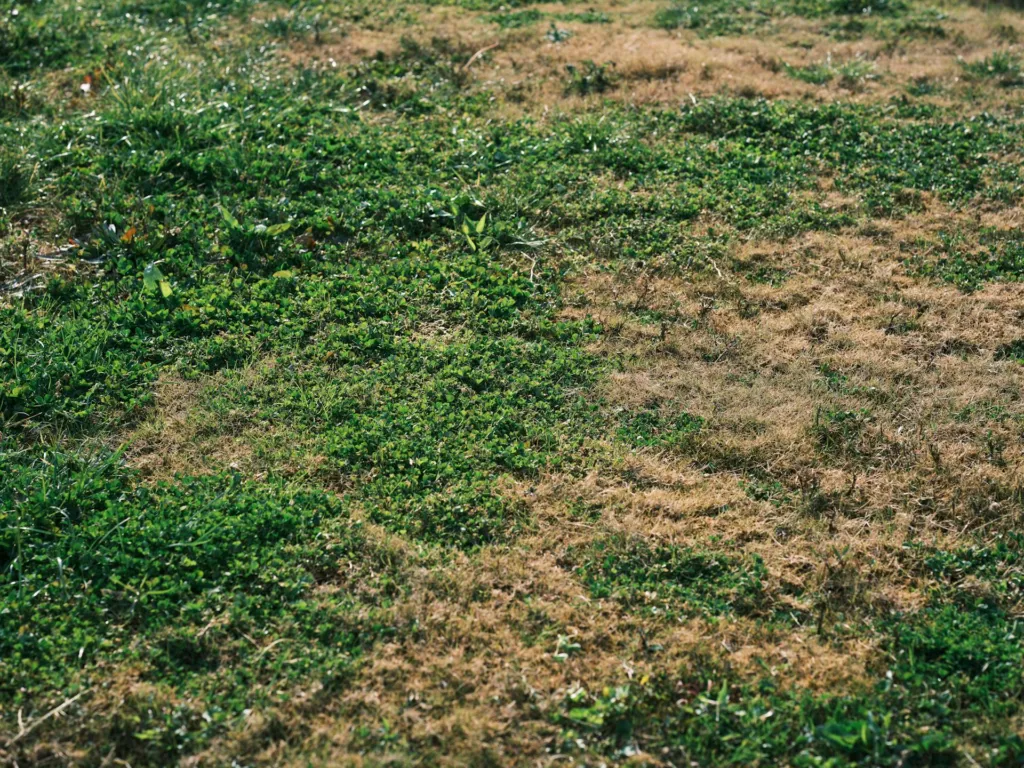
How to Make Dead Grass (Or Brown Grass) Thrive Again
Posted on January 19, 2026
Dead or Dormant Lawns in Midwest Can Be Revived With Proper Care
A lush green lawn that turns brown could drive you crazy. You could start feeling as if you’ve failed somehow when you start wondering if your grass is living or dead. Should you just assume it’s dead grass and tear it up in order to just start fresh?
Before you do anything drastic, let’s get to the bottom of what is going on. Keep reading to learn the difference between dormant and dead grass. Plus, get expert lawn care tips from the pros at Kapp’s Green Lawn!
Dead Grass or Dormant Grass?
Dormancy is just fine. It’s as if your grass is in hibernation and is waiting for the weather it dreams of when it comes. Dead grass, on the other hand, is when the roots and crown just give up and no longer have any chances of growing.
Then how can you determine the difference between each situation. First of all, get down to grass level and examine the area around the roots. If you notice any greenery around the base area of the grass, then your grass is just dormant.
What about another option? The pull test is when you gently pull a handful of your grass. Dormant grass will hold fast since the roots are strong. On the other hand, dead grass will be easily pulled without much effort.
Remember, dormant brown grass is the same color everywhere, and the grass is upright. Brown grass can be tan or straw-colored, for example. But if you have brown grass in your yard and it is patchy, soft, and stinky, maybe something is not quite right about it, and maybe dormancy is not the issue you are looking at, but maybe a lot worse.
What Is Dormancy?
In winter conditions in the South, the grass in your lawn can go dormant or get frost damage. But it’s not dead grass. The warm-season grasses like Bermuda, Zoysia, Bahia, and St. Augustine grow nothing and go dormant, turning brown or aren’t as colorful.
This is because there will be limited sunlight for photosynthesis. Lower temperatures will have the grasses in the warm season grow slowly or turn brown. This is natural.
However, underneath, it is still at work as the soil goes through the process of decomposition. Microbes are still working on decomposing organic matter. This is a gradual process by which nitrogen, phosphorus, and potassium are released for utilization when grass awakens in the spring.
Dormancy Depends on Where You Live
Without enough water, cool-season grasses such as fescue or blue grass become dormant during the summer months. Your lawn could turn brown in July and August in the hottest months, but green up again when cooler, wetter weather returns.
On the flip side, warm-season grasses go dormant in winter and return in spring. These southern grass types can stay green all summer while cool-season grasses aren’t able to do that.
Where you live can have an effect on grass types, too. In the transitioning zone of North Carolina, during late fall, temperatures must drop to around 50°F for night-time temperatures for the warm-season grasses to begin entering dormancy. In the South, those same grasses might not begin dormancy until December.
Why Does Grass Die or Turn Brown?
Brown grass that’s actually dead is a problem. You’re going to need to figure out why it’s brown or dead before you do anything, though.
Insects. Grubs eat roots, killing grass from the roots up. You will likely never notice it until it is too late. Depending on your region and the type of grass you have, other insects that attack include: crane fly larvae, billbugs, and chinch bugs.
Watering mistakes are one of the most common reasons for lawn damage. If you don’t water enough, your grass gets stressed out, the roots shrivel up, and eventually, the whole plant gives up. If you water too much, the roots will be without oxygen, then you’re on to root rot and fungi moving in. And let’s not forget that uneven irrigation leaves dry spots.
Compacted soil. Perhaps you have heavy clay, a lot of foot traffic, or you simply haven’t aerated in years. The soil becomes dense, the roots cannot spread out properly, water cannot seep in, and air cannot move freely. Over time, the grass on your lawn will gradually get worse.
Timing for lawn care. Overseed warm-season grass right before frost? It won’t grow. Pour on nitrogen during the hottest part of summer?
Lawn diseases and fungi. These cause irregular brown spots. For example, brown spot fungus causes large dead spots that are circular in shape. Dollar spot fungus causes small circular dead spots. Red thread appears as pinkish colors before dying off grass.
Thatch. This is the mushy layer of dead roots and stems between the green and the soil. When it builds up in a layer that is thinner than half an inch, water simply flows over it, and disease organisms can reproduce underneath.
Soil pH. If the pH is too acidic or too alkaline, your grass can’t absorb nutrients. Most lawns want a pH between 6.0 and 7.0. If yours isn’t in that zone, the grass just gets weaker over time.
Pet urine leaves brown spots that have a bright green ring surrounding them. This huge nitrogen blast will burn away the inner areas but nurture the outer areas. This is a nightmare for every dog owner.
How to Revive a Dead Lawn
- Determine What Happened
Start with a soil test to determine the pH level of your grass and discover the nutrient deficiencies and level of organic matter in your soil. Next, assess drainage. Walk around your lawn after a rainstorm and note where the water collects.
Try pulling up pieces of grass in a few areas to inspect the roots. Are they brown and soft, or white and full of life? Weak roots near the surface indicate an issue with either your soil or watering. Deeper, robust roots indicate a different problem.
- Prepare the Lawn
To begin this phase, get rid of the weeds. Then mow the grass to 1 to 2 inches. You want them to get to the soil, not just lay on top of preexisting grass and dry out.
In addition, make sure to rake up all the leaves. Leaves, sticks, and acorns, and so on. And if your thatch is thick, that is, it is more than a half-inch, then dethatch.
Finally, aerate your lawn. Aeration helps to alleviate any compaction and allows your lawn to “breathe” so that it can more easily accept watering and nutrients.
- Bring It Back to Life
If grass seed is left to be in contact with hard-packed ground, the seed will dry out before it has a chance to grow, and without starter fertilizer, seedlings will have a difficult time surviving.
Timing is important too. For cool-season grasses, the ideal time to seed a lawn is in early fall. If that isn’t possible, the next best time is in spring. At that time of the year, the soil temperature will have dropped from the warmer months of summer to a range of 50-65°F. This encourages the seed to germinate. Warm-season grass thrives in late spring to early summer seedings once soil temp reaches 65-70°F.
After you have placed the seed, you can start rake preparation very lightly. The seed must get some contact with the soil. Some people take it to the point of adding some compost or soil on top.
- Watering Appropriately
The first 2 to 3 weeks, it should be kept moist to evenly damp. This typically translates to watering it every day or even twice a day during hot, dry, or windy weather. Sub-surface watering or watering in thin streams is also effective for this process. The top surface of the soil should be lightly moist when touched.
As soon as you notice grass starting to grow, typically when it reaches a height of 1-2 inches, a deeper, less frequent watering method needs to be adopted.
In weeks 4 to 6,you can fall into the routine of watering your flowers with 2 inches of water per week, preferably in one or two soaking waterings and not in daily sprinklings.
- Continue Caring for Your Lawn
Mow often, but don’t go too low. Never mow more than a third of the blade height at once. And don’t forget to keep watering, even after the new grass is established.
Lastly, feed your lawn regularly to give it the lush, vibrant look all homeowners want!
Tips Based on Your Location & Season
Where you live changes everything. What works in northern climates may not work at all in the South.
Southern Lawns
Spring is your opportunity for a comeback. For Bermuda, Zoysia, St. Augustine, and Bahia, late April through June is the best time.
Late summer to early fall. That’s when you start preparing the lawn for the upcoming year, when the last application of fertilizer before winter, eliminating any lingering weeds and preparing for dormancy so the lawn can come back strong in the spring.
Cool Season Lawns
When are the best times to rejuvenate your lawn in the Midwest? Early in the spring, from the end of March until May, and in the fall, when it is late August until October. Now, fall is actually when you have the best opportunity because you are not stressing your grass out in the summer, immediately after it has emerged.
A harsh summer means that overseeding in autumn will fill in thin areas and allow you to sow more resilient grass varieties. However, it is likely that your soil will require Nitrogen after winter, as much is leached out or bound within it in winter.
In spring, keep an eye out for fungal issues like snow mold. You’ll notice gray, matted patches after the snow melts. Rake them out and, if needed, hit them with a fungicide to stop it from spreading.
Dead Grass FAQs
Do you cut dead grass?
Yes, and especially if you are planting a new crop of seed! If you keep the grass short, you can spot the spots where the grass is thin, and the seed will be better off in the ground rather than on top where birds might eat
How long can grass stay without water?
This largely depends. Cool-season grasses can survive 2-4 weeks before noticeable damage, but warm-season grasses, like Bermuda grass, can last 3-6 weeks during dormancy. However, if it doesn’t rain, it will die out.
What if not all of the patches are dead?
That’s all. Just fix those areas. You don’t have to redo your yard. Identify what happened to kill off those areas. Then treat that problem and fix your soil. Reseed. Use the same grass. That way, you get that same benefit.
Can brown grass become green?
If it is dormant, absolutely. If it is dead, it will not return. You can check that by doing a pull test and see if it is green down at the roots.
Will fertilizer bring dead grass back?
No, fertilizer only helps living plants. It can help healthy grass grow faster and fill in bare spots, but it won’t revive dead patches.
Fix Your Midwest Lawn With the Local Experts
If you don’t want to use your free time (and energy) to take care of every little lawn care detail, reach out to Kapp’s Green Lawn today! We proudly serve communities in the Midwest, ensuring high-quality lawn care services in these areas:
- Cleveland, OH
- Fort Wayne, IN
- Indianapolis, IN
- Pittsburgh, PA (eastern)
- Pittsburgh, PA (western)
- St. Louis, MO